


Secrets Of The Great French Restaurants
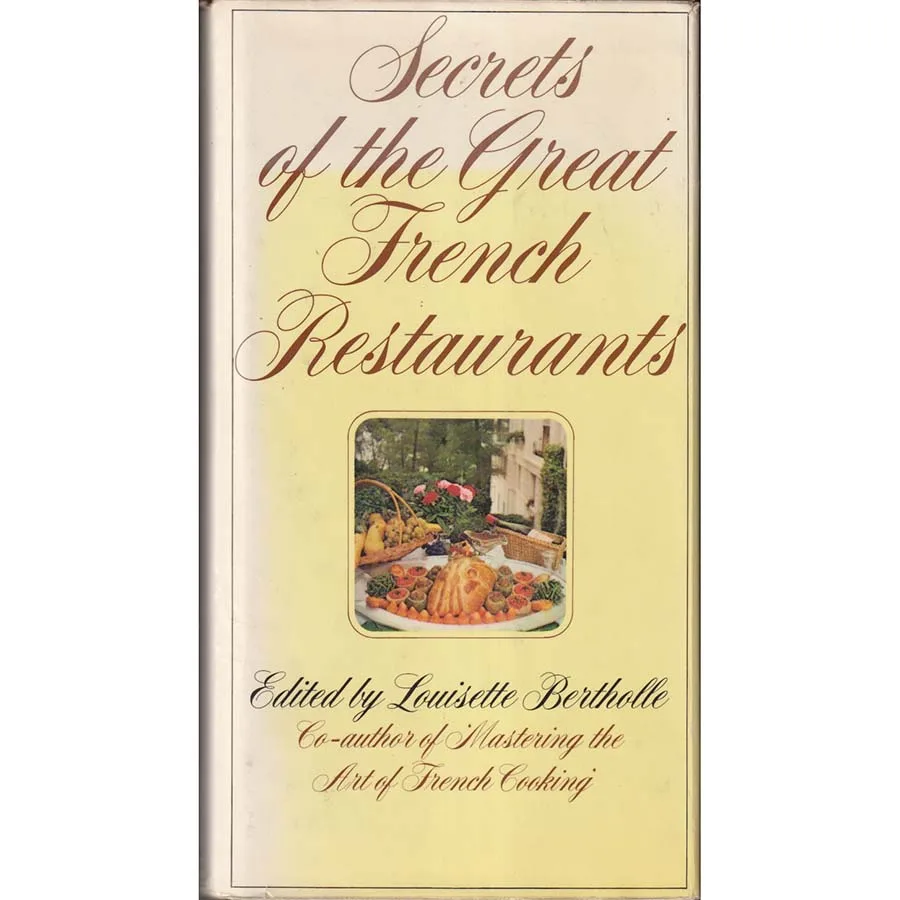
Publisher: Weidenfeld and Nicolson
Format: Hardback
ISBN: 0297765442
Secrets of the Great French Restaurants by Louisette Bertholle, published by Weidenfeld and Nicolson in 1973, is a book from that reassuringly confident age when French cuisine was still treated as the summit of civilisation and a sauce could apparently require more preparation than an average modern wedding.
Louisette Bertholle was one of the great names associated with bringing serious French cooking to an English-speaking audience, and this book turns its attention to the traditions, techniques and dishes associated with some of France’s most celebrated restaurants.
The title promises secrets, which is always encouraging.
Whether these are truly secrets in the sense of locked-room culinary mysteries or simply the accumulated techniques of chefs who preferred not to explain themselves too much is another matter, but the book does provide that wonderful old-fashioned sense that restaurant food is not merely cooked, but constructed.
French haute cuisine of this period was a world of stocks, reductions, sauces, careful timing and ingredients being persuaded through several intermediate stages before they were finally considered fit to appear on a plate.
Nothing happened casually.
Vegetables were not simply boiled. Meat was not merely roasted. Sauces were not something squeezed from a bottle and applied with optimism.
This was cooking as a discipline, a craft and occasionally a form of organised obsession.
Bertholle takes the reader behind the polished dining-room façade and into the logic of classic French restaurant cooking, showing how dishes achieve the richness, balance and finish associated with professional kitchens.
There is something wonderfully period about it now.
The 1970s were still an era in which French restaurants represented sophistication in a very particular way. Menus contained words people were expected to pronounce confidently, waiters possessed formidable authority, and ordering the wrong wine could feel like a minor diplomatic incident.
To modern readers, the book is therefore part cookbook and part social archaeology.
It belongs to a dining culture before tasting menus became endurance events, before every plate required edible flowers, and before restaurants discovered the commercial potential of serving three peas on a stone.
The appeal is not only practical.
Even if you never intend to recreate every dish, books like this are fascinating because they record the habits, expectations and standards of professional kitchens from another era.
What did restaurants regard as essential?
How much butter was considered reasonable?
How long was a sauce expected to take?
The answers may occasionally cause modern nutritionists to stare into the distance.
There is also something pleasingly democratic about a book which takes techniques associated with expensive restaurants and places them into the hands of ordinary readers.
One can imagine someone in 1973 buying this, entering the kitchen with tremendous confidence, and emerging six hours later with seventeen dirty pans and a new respect for professional chefs.
For collectors of cookery books, French food enthusiasts, culinary historians and anyone who believes a meal improves when the recipe contains the phrase “prepare the stock the day before”, this is a very appealing volume.
Condition: Good. A sound used copy with normal signs of age and handling. Published in 1973, it has survived longer than many restaurants and considerably longer than most soufflés.
ISBN: 0297765442.
A substantial and fascinating period guide to the methods and dishes of classic French restaurant cooking, from an age when cuisine took itself seriously, sauces had ancestry, and nobody apologised for using cream.
Sold by Crappy Old Books — where the recipes are old, the techniques are serious, and the calories are historically unavoidable.
Keep browsing: See more Food books Other books by Louisette Bertholle
